AmyLavernia

The website and occasional ramblings of an art student

  • Grenfell Tower Anniversary and the Relationship between Art and Tragedy.

    Following the one year anniversary since the tragedy of  the Grenfell Tower fire in London, this article will be paying homage by asking the question, does an event change our reaction to art?

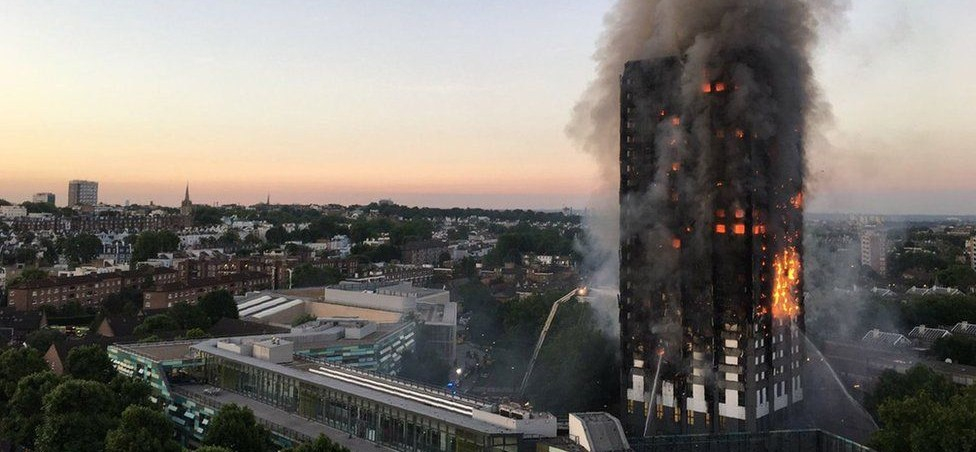
    Grenfell Tower sparked a national controversy into what extent the government were accountable for negligence and class discrimination.  Headlines declared the government should be responsible for manslaughter, calling the incident “criminal” (Daily Mirror) and demanding that we should “arrest the killers” (Metro). The event also sparked protests within the city.

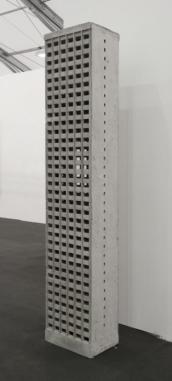
    Contemporary art isn’t shy to the exploration of socio-political criticism. Many artists use art as a means of activism, be it of class, race or gender (to name a few) art is a strong playing field in challenging society. This can be seen in comparison to Rachel Whiteread and Marwan Rechmaoui’s exhibition held at the Tate Modern, of which uses the image of multi-storey buildings to explore the persecution of the working class, as stated on the Tate website, “Art can hold up a mirror to contemporary life, raise awareness about urgent issues or argue for change, as the artworks in the display demonstrate”.


    Take any picture of Grenfell Tower and you can see how it could easily be one of Rachel Monument for the Living 2001-8 by Marwan Rechmaoui born 1964Whiteread’s  images from the series “Demolished” that records the demolish of social housing . The Tate website describes that “These images were made at a time of increasing social inequality and homelessness and record the failure of this utopian optimism.” A failure that hit home after the tragedy. Whiteread’s discontent at the homelessness epidemic in Britain can be compared to the discontent at the homelessness of the surviving victims, as writes for The Guardian: “The Grenfell victims are forgotten people the politicians have failed”. Another controversy within the tragedy was when residents at Kengsinton refused victims into their neighbourhood, a headline by The Independant stated that “Wealthy Kensington resident says Grenfell Tower victims shouldn’t be given shelter in luxury flats” with residents claiming that “Our council tax bill is very, very high, our service charge bill is very, very high, so why should someone get it for free?” as if the trauma, loss of home and possibly the lives of loved ones wasn’t price enough.  This incident furthered a feeling of class tension that was construed within the tragedy. The corpse of the burnt building stands in effigy  like the empty, carcass shell of marwan rechmaoui’s “monument for the living”,  a replica of the Burj al Murr building in Beirut, “The tower is too tall to knock down and too dense to implode, and so remains as a blight on the skyline and, for many artists and thinkers of Rechmaoui’s generation, an appropriate memorial to the fratricidal conflict that has never been fully resolved and has yet to be commemorated by any public gesture of reconciliation.” (Tate)
    These works become the prophesied illustrations on the wall of contemporary society. They allude to the statement that “art imitates life” as the original pieces were a commentary on reality, however, they can also be seen as confirming Oscar Wilde’s statement that “Life imitates art far more that art imitates life” (1889) as the tragedy of Grenfell Tower follow the warnings that these artists foretold, in the very city it happened. Having seen the works before the accident, I found that the haunting memory of the tragedy becomes apparent when looking at Whiteread and Rechmaoui’s works now, giving the themes explored a sharper poignancy and proving that an event may contribute to our reaction to a piece of art.

  • Celebrating 100 Years of Women’s Right to Vote – Procession 2018

    If you live in the areas of London, Belfast, Cardiff or Edinburgh you may have noticed some blocked roads and a parade of Purple, White and Green on Sunday. This was the Processions event celebrating the 100 year anniversary of the women gaining the right to vote.

    Image result for emily davison
    Named a martyr for the women’s vote, Emily Davison (source)

    The Procession was a time to celebrate the progression of the modern woman and remember the price of the privileges we have today. This price includes famous death of Emily Davison, who has been named the martyr of the suffragette movement, after an attempt to attach a banner to King George V’s horse, lead to her death in 1913. Another face of the suffragette movement is Manchester own, Emmeline Pankhurst, founder of the Women’s Social and Political Union, and was named in Time’s 100 Important People of the 20th Century. She has now become a key aspect of Manchester’s identity, as can be seen in her memorabilia in the newly opened Manchester Shop at Afflecks Palace.

    “I would rather be a rebel than a slave” – Emmeline Pankhurst

    Being a young woman at university, I live with the weight of the generalised assumption that the younger generations don’t vote – As can be seen in Manchester’s lowest turn out, at the predominately student based area of Fallowfield being an embarrassing 17% (source) Many students, including women, simply believe there is no point. Although we are lucky to be at a point where the difference between the turn-out for men and women in the UK is none-existent, it pains me to know that there are still many women, especially my age, who don’t vote. Being at the London Procession reminded me of the costs to have a voice in democracy, and made me proud to be an active voter in commemoration of those who fought for my right to.

    The Procession acted as both a celebration of liberation, and a harsh reminder of the battle women have, and still fight. Our right to vote is a privilege some take for granted, especially as, in many countries still, a woman’s vote isn’t an easy walk to the polling station; graziadaily  exclaim that it is still hard for a woman to vote in countries such as Saudi Arabia (who only made it legal for women to vote in 2015), Kenya, Uganda, Oman and Egypt.

    “In the 2016 elections (in Uganda), violence against women at the voting polls was so concerning that a control centre was set up to monitor it. It received 600 complaints from women’s rights groups who claimed it only further discouraged women from voting, causing delays in queues that forced women to go home to return to domestic duties” – graziadaily.co.uk

    The battle for women’s liberation is one we fight everyday, and this Procession was a beautiful way to display the tribulations woman-hood has faced to be where we are today. It was a great experience to be able to stand within a crowd of proud women and supporting men. Despite getting there after a five hour journey from Manchester, One hours sleep and the weather being beyond hot and sweaty, (being quite fitting as our own allegory for the journey of women in history, making the celebration even more poignant) it was an amazing and touching experience.


  • Trip to Tate Modern: The Must See Tower of Radios.

    “This is truly the first contemporary piece to make me stop in my tracks in surprise for a long time.”

    Following a recent trip to London, I find myself with the itching need to blog again. So, to start, I will be reviewing my experience at the famous gallery Tate Modern.


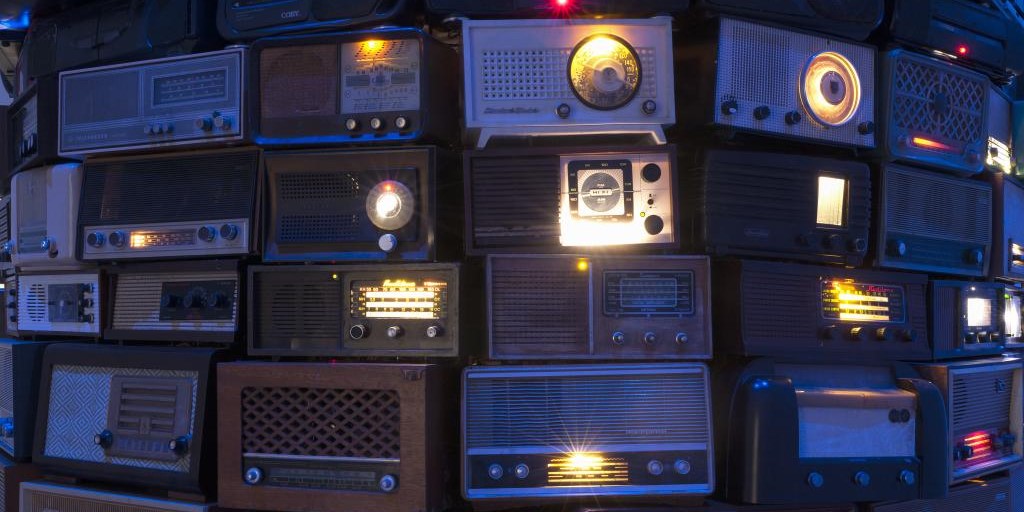
    I had to start off this series with the instillation work of Cildo Meireles’ “Babel” (2001), an astounding tower made of second-hand radios.  As the name suggests, the piece alludes to the biblical story of the “Tower of Babel”, in which mankind are punished by God for building a tower to the heavens, taking away the unity of language and their ability to understand one another. It is then said that mankind split to separate parts of the world and this is how the different languages originated.

    As you walk to enter the room in which this installation is located, you can hear inconceivable faint whispering of noise, a noise that grows into a loud whirlwind of hypersensitive information as you enter the blue, dimly lit room. This is when the sense of an overpowering sublime and awe strike as you find yourself face to face with a tower of radios singing in a cacophonous mess. The lighting creates a cold, eerie atmosphere that further confronts the audience with a sense of celestial intimidation. The contrast with the calm, heavenly connotations of the blue light, the sheer size of the tower, and the noise makes the viewer completely engrossed and intimidated by the works, as if feeling the wrath of God. This is truly the first contemporary piece to make me stop in my tracks in surprise for a long time.

    The decision by Meireles to place these radio’s in order of age, would suggest a deliberate reflection of time, with the development of modernity and technology. When linking this with the allusion to the story of Babel, perhaps Meireles is confronting the audience with a warning, that we too are reaching for the heavens, and that we must face the consequences of this. The tower itself reflects aspiration, building upwards towards the sky; this creates an image of capitalism, further emphasising this tale that Meireles is telling of the modern Babel.

    The theme of language is developed with the use of radios used to create a “tower of incomprehension”. The confusion of the noise reflects the communication of today’s western society, the vast information fed throughout humanity is inconceivable. In the story of Babel, the inability to communicate is, as described by the Tate , “the source of all mankind’s conflicts”, as the radio acts as a symbol of modern communication, predominantly with an emphasis on the media as a source of information, perhaps Meireles is suggesting that this is the source of conflict in the modern world.


    Credits

    Tate Modern

    Figure 1

    Figure 2

    Figure 3

  • Lets try this again.

    Hello, it’s me again.

    I know that you haven’t heard from me in a while ( more than a while – about five months) and I’ll admit that I have been unforgivably neglectful of this blog.

    Many changes have occurred in my life since I last made a blog post, moving to Manchester to study Fine Art and Art History has been such an experience, so much so that I’ve been too distracted to write. No more. I will be taking all these new experiences not as a source of procrastination but as a source of inspiration.

    So, what to expect from this blog from now on? As before, I will be experimenting with different material to see what works best for me as an artist and writer and for you, the readers. This will include recordings of my development as an artist, developing my portfolio of work (and hopefully selling a thing or two), pieces of creative writing, exhibition reviews, art theory articles and hopefully some interviews and features.

    you’ll be hearing from me again soon,

    AmyLavernia

  • The Trodden Rose of the Befriended (poem)

    The discolouration of a rose,

    Tragic. Decaying.

    The blood red of it’s harsh thorn

    In my aching breast.

    The harsh reality,

    Though I loved natures gift,

    Feeding with my tears,

    I loved too much.

    And now it drowns me,

    The salt stinging my open wound.

    You see, all beauty must end.

    The betrayal.

    No matter how much you

    nurse its life,

    mortality is inevitable.

    And so, now you leave me.

    The petals of our memories falling

    On the rain drenched floor.

    The moonlit sky darkening

    my perception of your colour.

    But I hear your screams,

    and with blood stained hands I cut

    The ribbon of what we once were.

    Your head falling to the floor.

    A pretty rose no more.


    Photo credit: Alex Winward

  • Lord of the Rings – Could there be a troubling reality behind the fantasy?
  • An Ode to My Phantom – A farewell to Ben Forster’s time in the mask.

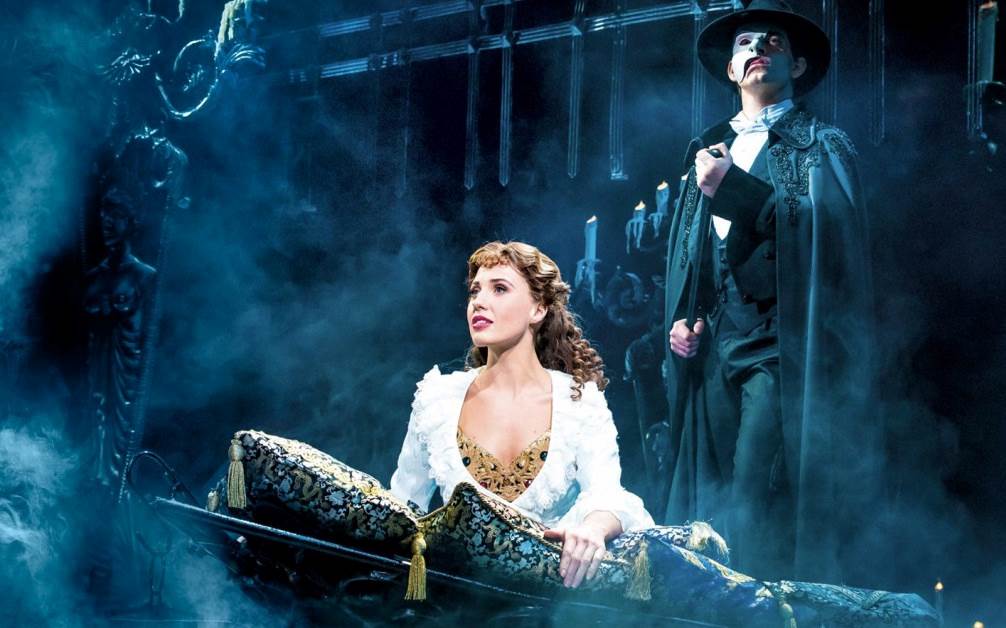
    As friends and family alike will know, I am a rather big fan of Andrew LLoyd Webber’s well loved spectacle; If I’m not cracking out a spontaneous rendition, I’ll be drinking my coffee from my favourite Phantom mug.

    Phantom of the Opera follows the story, based on the book by Gaston Leroux, of the lurking musical genius’ manic obsession with opera singer Christine Daae; accompanied by beautiful scores, this musical is so moving that the original west-end production still has a full audience, show after show. And, with the announcement of a changing of the cast, from the 4th September, I decided to write a farewell article to Forster’s time in the mask.

    Most fans will likely remember the first Phantom they see live as one might a first lover, they will always hold an important sentiment; Ben was mine. I had gone on a trip to London to see the show for my 18th birthday, and, having formerly known of Forster from his role as Jesus in the arena tour of Jesus Christ Superstar, I was excited to be able to see him perform live. Before seeing Ben, I had chosen Ramin Karimloo as my die-hard Phantom, but Ben’s performance shook that up.

    When I first discovered that Forster was the current Phantom, I was curious to see how he would pull it off, with a demanding operatic style different to his other roles, and the high pressures of such an iconic character; and no amount of YouTube videos of his performance prepared me for how phenomenal he would be. What astounded me was Ben’s profound understanding of Erik (The Phantom); the vulnerability, instability and complete devotion to Christine. At one moment, he was tall, powerful and confident, but as soon as the mask came of it was like looking at a lost child as his posture, facial expression and dynamic completely disintegrated into hopelessness. Then, he was a cunning maniac, with shaking, twitching movements, and garish wide eyes. This, made for one of the creepiest portrayals of the Phantom that I had seen.  Every slight gesture made, be it of the smallest detail of the hand, or an eyebrow, was done with complete passion and understanding. And for those familiar with the musical number the point of no return, it takes true artistic talent to be able to express a character so flawlessly while being completely covered head to toe in a black cloak.

    To anyone that hasn’t had the chance to see Forster’s performance of Erik, you have truly missed out on a one of a kind Phantom, but, who knows, he may be back singing the music of the night one day! (fingers crossed).

    It is a shame to be seeing Forster leave the mask behind, with a back catalogue of roles such as the Phantom, Jesus, Brad Majors (Rocky Horror) and Buddy the Elf (the role that Forster will be returning to this Christmas) it will be exciting to see what the future holds for Forster and where his versatility takes him. It will also be exciting to see Ben Lewis return to his role, know for his role as the Phantom in the film for Love Never Dies.


    Credits: https://uk.thephantomoftheopera.com/

    Image sources:

    http://www.officiallondontheatre.co.uk/news/backstage-pass/features/article/item357314/a-day-in-the-life-of-phantoms-ben-forster/

    http://benforsterbase.tumblr.com/page/8

    http://www.dianliwenmi.com/postimg_4235949.html

    https://www.theodysseyonline.com/phantom-opera-ben-forster-changed-theaters-infamous-character

    https://uk.thephantomoftheopera.com/

  • We could all agree that “Vampires Suck” but What We Do in the Shadows has changed the game
  • Mornings on a Motorway Bridge (short piece of writing)

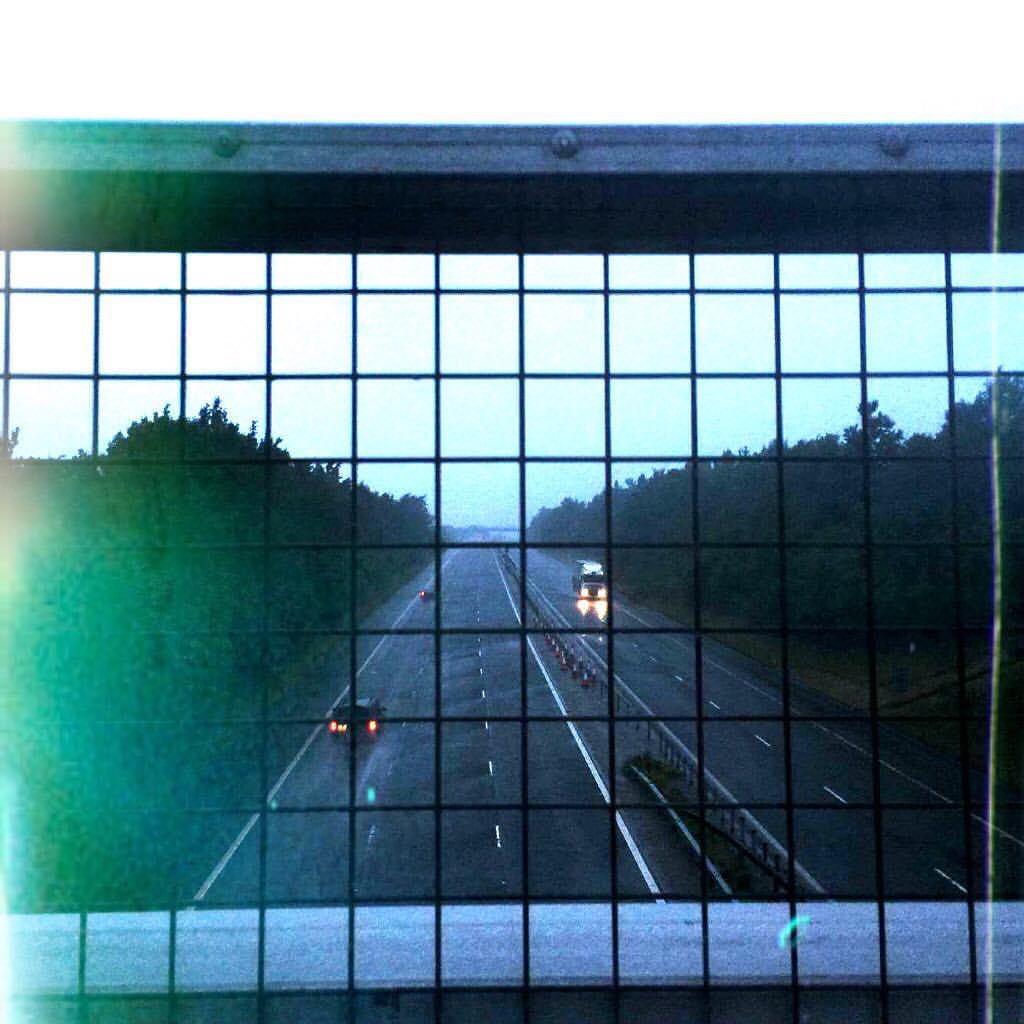
    Together we stand looking down at the almost empty roads, it’s 4 am and we haven’t slept, strange really as some people have already slumbered and woke to a new day. Our minds have not yet rested and still daunt on the troubles of the night, the moons voice echoing our fears, still fresh upon our ears. The sky cries heavy tears plummeting on the cold Tarmac; water glossing the hard stone like thick oil. A soft pedal beat echoing along to the whispering voices of passing cars; a sombre yet comforting song. The sky is duller still, thick grey clouds choke the air like smoke from the last cigarette. A raindrop, or perhaps a tear, meanders down my pale cheek, my drenched clothes clinging to me like a lingering embrace. And though my chest suddenly burns with a heavy, aching sense of remorse a smile creeps into my iced, cracked lips; for there’s is a sudden sense of beauty in the empathetic loneliness; and so, when the lights of a passing car glisten in the rain, I wave and take your hand…

  • Artist feature: John Casey.
    This blog post was quite exiting for me, as I had the opportunity to interview one of my favourite artists, John Casey!
    From Oakland, CA, the best way to describe his works is dark and humorous.
    On his website statement he exclaims ” I tap into my subconscious and psychological brain space, to conjure loose metaphors and symbols, and weave them into compelling characters.” My favourite works from Casey being a series of sculptures consisting of pairs of jeans with different objects/subject matters for the head, together, they make a bold, simplistic, yet, surrealist image (and a great decoration for your fireplace).
    Q: who are some of your favourite artists? – whats your favourite piece of art?
    A: Wow, there are so many interesting artists out in the world today. I have new favs daily. I recently went to a show of Urs Fischer (http://www.ursfischer.com/) at San Francisco’s Legion of Honor (https://legionofhonor.famsf.org) museum where is truly playful, oddball, surreal sculptures were dispersed throughout the museum’s permanent collection of Medieval through Impressionist works. Such a cool juxtaposition of contemporary and traditional. There’s a new exhibition at the same location and concept with contemporary works by Sarah Lucas interspersed throughout the museum that I have yet to see but it looks pretty cool. I am very lucky to live in a very art-rich environment in the Bat Area. Oakland is probably home to more artists per capita than any major city in the world.
    Q: How did you develop your style?
    A: I have been drawing my whole life. I love working mostly in black and white with occasional forays into colour. When I was in art school at the Massachusetts College of Art in Boston, I majored in oil painting but I rarely worked with a traditional approach to process and materials. I did a lot of drawing and painted sculpture. At that time in the 1980s, the emphasis was avoid developing a “style” per se. Ideally you would just make a lot of art that was as honest as you could make it, and a recognisable look and feel would emerge organically from the practice. I still think that approach has value for young artists but nowadays, with social media and the internet making visual arts exposure open to everyone, having a defined style early on seems important. My style has developed over many years of working in the studio and exhibiting. I’ve never been in a big rush to be recognised but it’s probably very different for young artists today.
    Q: What is your creative process, do you collect photographs, have sketchbook? etc.
    A: I work in sketchbooks but not as much as I probably should. I mostly start on paper or panel from scratch with a few very vague ideas in mind and let my subconscious guide me. The idea might be a few keywords or a gesture of a figure or a shape. If I need to I might use a projector and some photo reference for proportion but I am quick to distort the image just by the act of loosely tracing. I really try to make a series of wrong, or not so obvious choices when sketching out the initial figure or figures in a work. And I may erase out or paint out whole sections. For sculpting I usually plan a bit more, but I try to leave room for big changes. I may even take an electric saw to a fairly rendered sculpture and behead the figure or remove and reattach limbs.
    Q: Francis Bacon once said that he didn’t go to art school because he didn’t want it to effect his style. What is your opinion on the educational system on creative subjects?
    A: I personally think I benefited from getting my BFA at art school. The experience exposed me to so much more of the art world that I would have missed. Of course this was pre-internet. But having art history and critiques are pretty valuable. When Bacon was a young creative, most art schools taught traditional methods. Now that we live in post-modern times, teaching is much more open and expressive. But debt from higher education is a big consideration in the US so I don’t blame kids for skipping art school. Almost better to apprentice with an artist you dig, and learn directly from that person.
    Q: I am currently writing an article on the effects the growth of modern technology has on the Art world, do you have any opinions on this? do you think that technology has had a good impact on art or a bad impact?
     
    A: I’m of two minds on tech in art. Firstly, a tool is a tool. You can use internet reference or laser cutters or 3D printing or whatever to make what you will make. As long as you make sure it has your hand visible in the process. Don’t let the tool dictate the total outcome of any given work. That said, secondly, I am a big proponent of making stuff by hand. Drawing, painting, sculpting allow the brain to exercise the fundamentals or creativity. There’s really not tech that push your harder creatively than making shit by hand.
    Q: If you could have a dinner party with five artists, dead or alive, who would it be and why?
    A: Most of my friends are artists so I’d say I got that covered. And I’ve met many of the artists that inspire me who may or may not be famous. Many are cool but some are jerks. Sometimes allowing your heroes to be mysterious in your mind is better. They can disappoint you for sure. But I’ve also met and befriended many cool artists who are genuinely good folks. I’m sure it’s the same with all professions.
    Q: You say in your bio that your art is inspired by people you know, any interesting stories behind a piece of art?
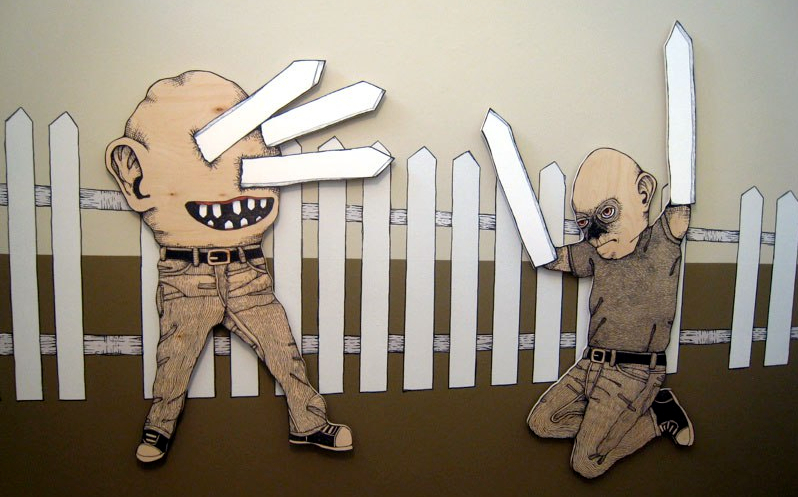
    A: I met this collector who was divorced. His three sons lived with their mom and would visit him a couple of times a month. He was very permissive with his boys, allowing them to run roughshod over his house and property because he wanted to be a fun dad. I’m sure many divorced parents, especially dads, experience this. One day he hadn’t seen the kids for a couple of hours. He went to investigate and way out back (he has a large property) the boys had torn the white pickets of his boundary fence and were battling each other with the pickets as swords. I loved the image of this chaos especially because I am one of three brothers close in age and I got into plenty of mischief as a kid. I created a painted wood cutout installation I titled “Picket Fencing” that showed various fantasy characters battling with pickets. A good example of art reflecting life, and vice versa.
    I hope you have enjoyed my first “Artist Feature”, hopefully this is the first of many, I will probably be digressing from the focus on article-esque blog post for now while I concentrate on finishing my short story “Infatuation with the End” ( a slight hint/ teaser there) and a new project I am a part of (more information on this will be revealed soon!) though I do have a few poems to keep you occupied until the story is finished.
    ~ AmyLavernia
    references: