
Last Thursday morning, I expected to wake to another day of recluse, painting and writing. Instead, I found myself on a train to Manchester following an out-of-the-blue invitation by my Granddad to see the opening night of the exhibition “Queer Noise” at The People’s History Museum. Our visit included an exploration of the likes of gay culture, drag and politics ( I can see now, why my Granddad offered me his spare ticket).
I found this visit to The People’s History Museum in great timing, as it provided useful information for various other LGBT+ related articles I had already had in mind. Something that added to the experience was a sense of personal association, being a bisexual, a sexuality that is often overlooked or misunderstood even in gay culture, that the inclusion felt was like a breath of fresh air. Also, being a lover of drag art and being from Manchester, it seemed the perfect expression of my identity and highlighted the community that I will possibly grow to be a part of; I imagine that this is how many other guests felt, and you could somewhat feel it in the air, noises that are usually overwhelming became welcoming and instead of feeling small amongst the crowd I felt a part of something, despite being around strangers.
The opening night of Queer Noise
With it being the opening night, the celebration added to an atmosphere that was so much more than I had expected, (exhibitions usually consisting of folded arms and the occasional muttering of an opinion) with diverse audience of visitors, the room full of the excited conversing of friends that really expressed the communal spirit, (also, lots of cool looking people who I was too awkward to talk to). “Queer Noise” explores Manchester’s history of LGBT+ music and club culture. The exploration of the influence of music was only fitting for Manchester, a city notorious for it’s musical culture, and it comes as no surprise to see that this had influence on the cultures of gender and sexuality. My favourite example of this being with banners (of which my camera couldn’t get a good enough picture of due to my short height) saying “Bowie turned me queer” and “gay for Morrissey”. The Bowie banner having a degree of truth to myself, for Bowie has inspired my love of androgynous style and use of performance persona as an artistic medium. Bowie also helped me to accept my own sexuality, this again showing the constant influences of music on ones own identity. “Queer Noise” was curated by Abigail Ward, who proudly stood and delivered a speech to the supporting group of visitors, after the hush of music and chatter, she spoke of her own experiences: her inspiration being her own search for her queer community in 1998 (having never met a lesbian before), and finding this through music, such as Homo Electric, “I personally found my queer community when I found my music community”, this message of the effects of music on finding a sense of belonging and fellowship become even more evident for myself that night, as I was later approached by someone complimenting the painting of Bowie on the back of my jacket ( I promise I’ll stop talking about Bowie now) this lead to sitting in a bar with her and her friend and talking about Joy division and Iggy Pop.
Back onto the topic at hand, Ward also spoke of the overlapping of the queer scene and the punk scene, something, I think, highlights an era of liberation through the variation of musical movements. With music, food, drink, speeches made and performances; the opening night wasn’t only a celebration of an exhibition, but a celebration of the community itself.

( Drag mother and daughter, Violet Blonde (right) and Beauvaleau Blonde (left) and I (the awkward peanut in the middle) )
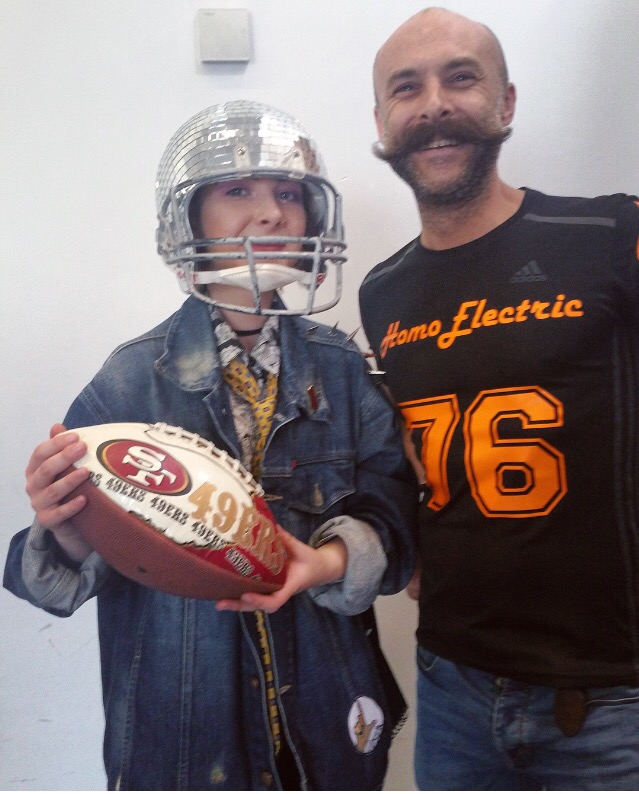
( Me, modelling (rather badly) the hand embellished helmet of the fabulous, moustached @creativeheadspace (instagram) )
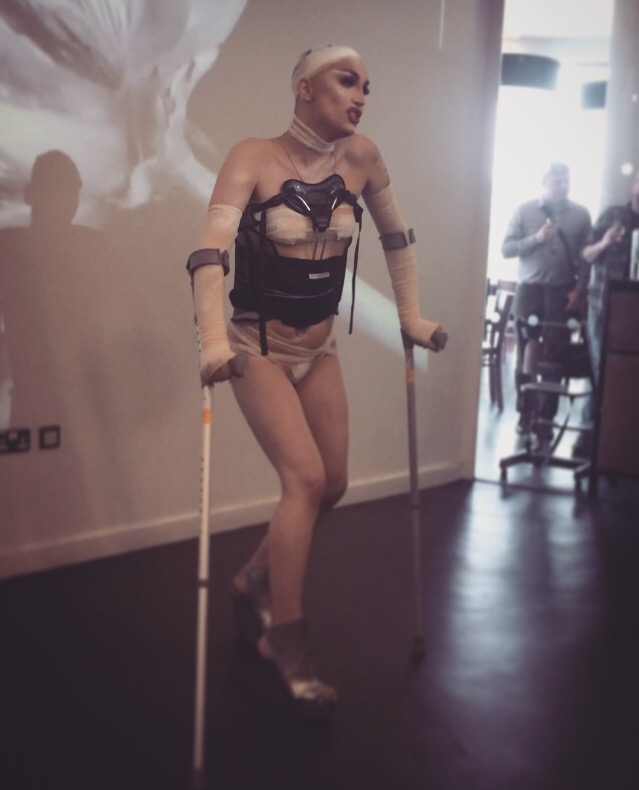
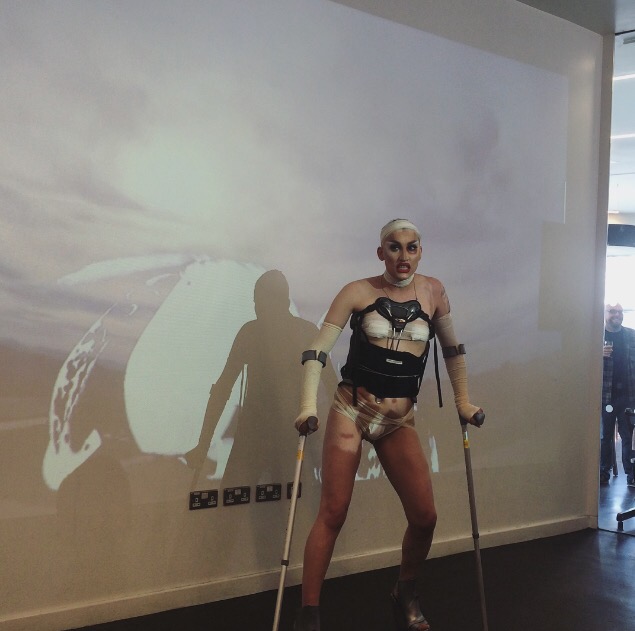
A performance by Grace Oni Smith
The opening of “Queer Noise” was complimented by a stunning lip sync performance and show of projections by drag artist Grace Oni Smith, in which told the story of LGBT+. With a revealing costume of delicately wrapped bandages, and crutches, it was a display of vulnerability, of pain and the battle scars of the wounded throughout the history of the LGBT+ community. Bringing home the mistreatment’s faced, an ode to those who have lost their lives due to hate and prejudice, and to every bruise left on a bullied child or the emotional wounds of family rejection (to name a few of the possible sufferings), this made me aware and grateful of my position, having not faced these pains, aware of the sufferings of history to bring me (and others) a safer and liberating culture of acceptance.The juxtaposition of the extravagant beauty of makeup screaming the pride, freedom and art of growth, and the celebration of individuality. The dropping of the crutches, standing tall and proud, showing how we, the LGBT+ community, can fight for ourselves, and the growth of liberation and strength with the passing of time in the 21st century and the ever developing society.
Never Going Underground
“For hundreds of years LGBT+ people have been criminalised, persecuted and erased from history. The battle for equality is long and hard fought, with brave pioneers taking a stand, and activists and campaigners coming together to fight for the right to simply be themselves. These are our stories…”
“Never Going Underground”, was another LGBT+ themed exhibition, exploring the broader history. The exhibition introduced me to a variation of LGBT+ icons including: Claude Cahun and Marcel Moore, Edward Carpenter a poet, socialist campaigner and early gay rights activist and Peter Wildeblood (a pretty cool name I must admit), the author of “Against the Law” (1955) who was imprisoned on charges of indecency between men. Being a perfect compliment to “Queer Noise”, seeing the exhibition made even more evident the potent integrity of the underworld of sexuality and gender liberation, as it told many of the real life stories of the past, and the fighting for rights that has brought about the (though not yet perfect) society we live in that Grace Oni Smith expressed, and showed that whether through the use of artistic statement, activism or any other expression, no matter the rain, the flames shine still.
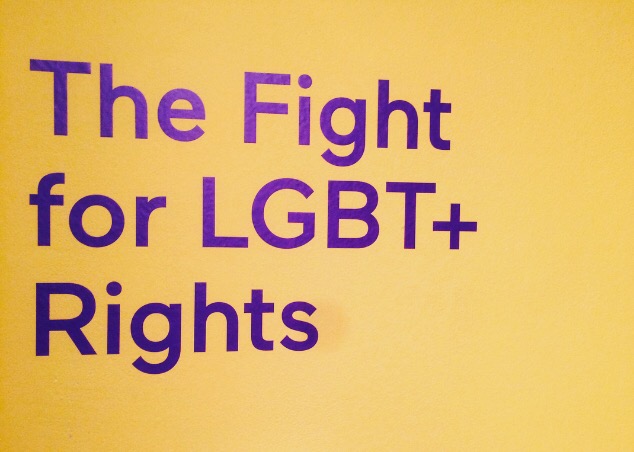
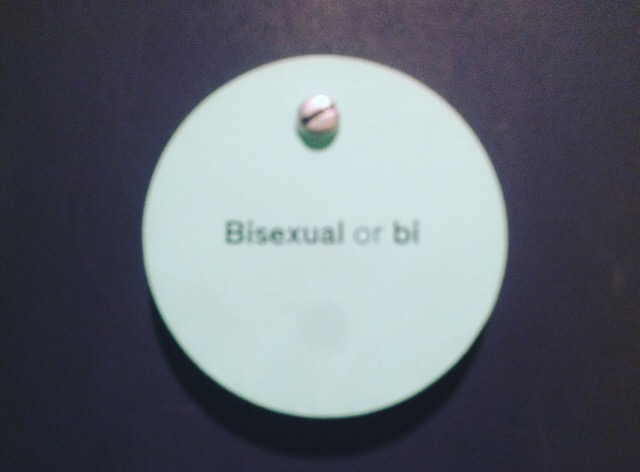
(My failure to focus the camera created an accidental meaning, expressing the sense of misunderstanding in the bisexual community, a lack of focus in society… )
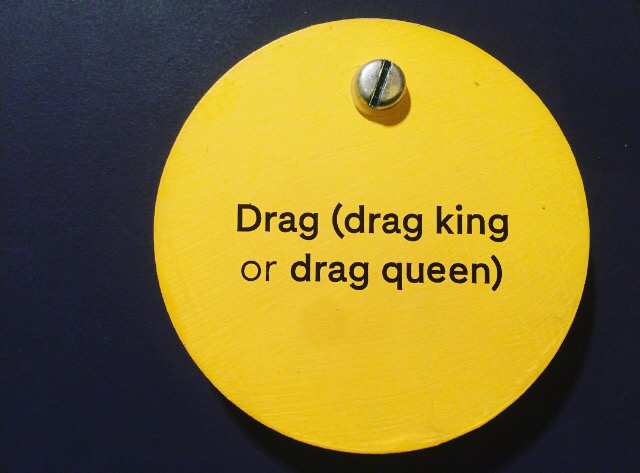
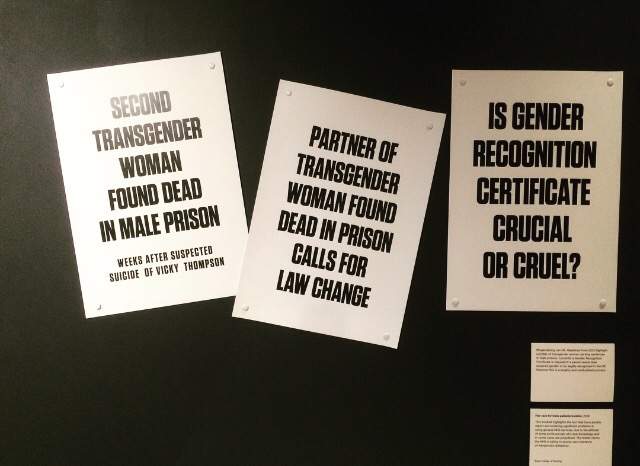

( a moving instillation of envelopes holding small messages of love to lost ones, expressing a fellowship and connection through bereavement)
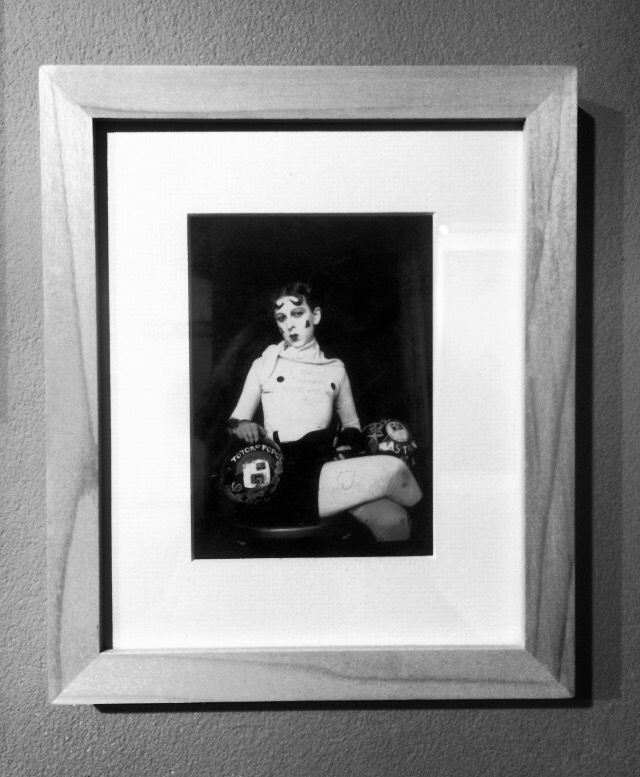
(An image from “self portraits” of Claude Cahun and Marcel Moore (1920s) )
Continuum: “Framing Trans Lives in 21st Century Britain”
“Continuum’ focuses on the power of creativity to transform otherwise difficult and overlooked experiences and the ability of visual art to communicate the otherwise incommunicable.”
“Continuum” was a collection of artwork by trans and non-binary artists, curated by Artmob (founded by Louis Bailey and Alex J Gardener) Alex J Gardener states in a lino piece, “It is human nature to want to be seen heard recognised”, Alex’s works “explore the philosophy and politics of (in)visibility of trans identities” this is evident in this piece, clearly creating an expression of humanity, and makes apparent that the LGBT+ is asking nothing more than what is wanted by anyone else, whilst being in the form of art, the truest form of self expression, connotes the boldness of self acceptance in a society that still holds views of ignorance. It was a perfect expression of the art of gender, and the abilities to express it. Using the language of art to communicate the artists story, feelings or just express their support, this exhibition highlighted the power of art in addressing social issues and acting in a catalytic way of reform and improvement, a platform of vocalisation. Artists featured are:
Nick Askew

Louis Bailey

Jeno Davies

Emma Frankland

Alex J Gardner

Chris Hubley

Samantha/Scott Kentell

Sydney Main

Vijay Patel

Harry Saxon

JD Scott

Jak Soroka

With that, Part One of ” an impromptu day out” comes to a close, I hope that this post has provided some interest and possibly even inspired you to visit The People’s History Museum yourself! Part Two will be about my visit to the “La Movida” exhibition at Manchester’s HOME, centre of contemporary art, theatre and film.
~ AmyLavernia
References:
https://www.mdmarchive.co.uk/exhibition/id/77/QUEER_NOISE.html
https://www.artmob.co.uk/artists
http://www.phm.org.uk/whatson/queer-noise/
http://www.phm.org.uk/whatson/never-going-underground-the-fight-for-lgbt-rights/
 AmyLavernia
Leave a comment